Desi Culture: A Complete Guide to South Asian Traditions
There’s a certain warmth in the word “Desi.” It’s not just a label for people with roots in South Asia — India, Pakistan, Bangladesh, Nepal, Sri Lanka — it’s a feeling. It’s the smell of spices drifting from a kitchen before anyone’s even hungry. It’s the sound of bangles clinking during a wedding function. It’s an aunty insisting you eat “just one more roti” even after you’ve said no three times.
Desi culture isn’t one single thing — it’s a living, breathing collection of traditions, values, and everyday rituals that have been passed down, reshaped, and carried across borders for generations. This guide is meant to be your starting point: a complete overview of what makes Desi culture so distinct, and a map to the deeper topics we explore in detail elsewhere on this site.
What Does “Desi” Actually Mean?
The word Desi comes from the Sanskrit-rooted term desh, meaning “country” or “homeland.” Over time, it evolved into an informal but affectionate way for South Asians — and their diaspora communities across the UK, US, Canada, Gulf countries, and beyond — to refer to themselves and their shared cultural identity.
Being Desi isn’t tied to one religion, one language, or even one nationality. It’s a cultural umbrella that spans Hindus, Muslims, Sikhs, Christians, and more — united less by belief and more by shared customs, food, music, family structures, and a certain unmistakable way of showing love (usually through feeding people).
Family: The Heart of Desi Life
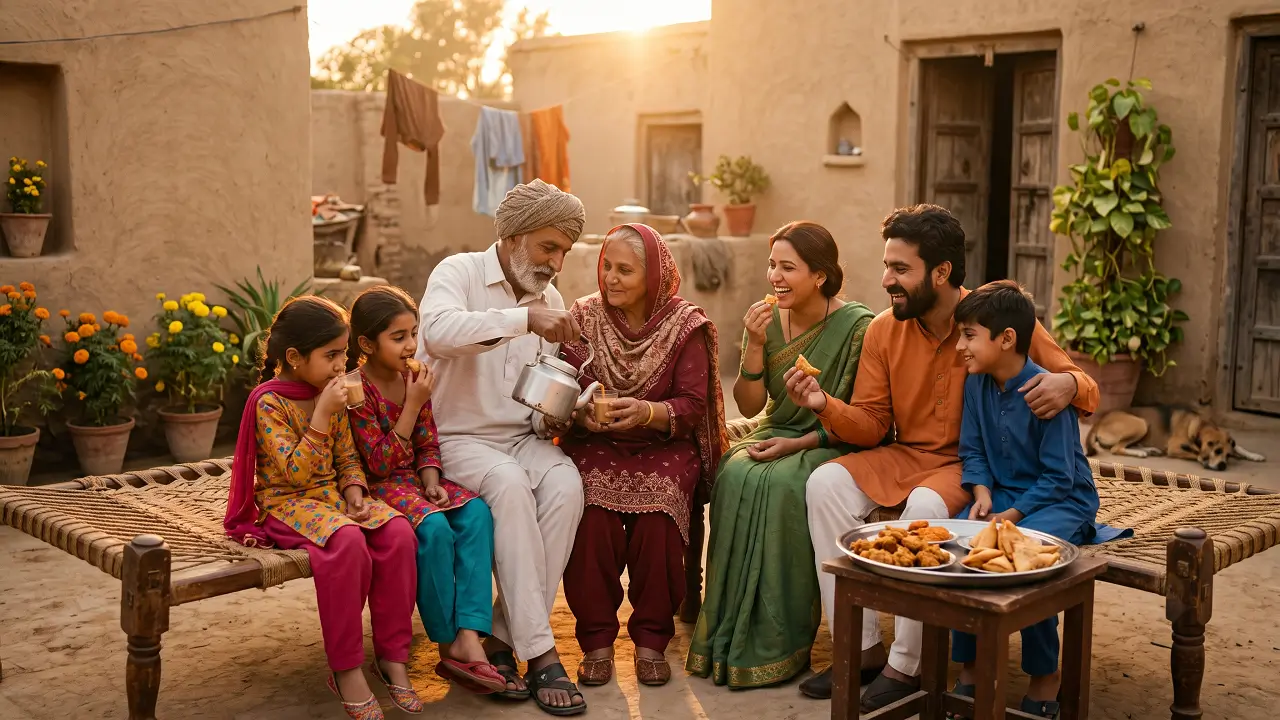
If there’s one thread that runs through nearly every aspect of Desi culture, it’s family. Desi households are often multi-generational, with grandparents, parents, and children sharing not just a home but daily responsibilities, decisions, and celebrations.
Respect for elders is deeply embedded — touching feet as a gesture of blessing, seeking approval for major life decisions, and prioritizing the family unit over individual preference are common threads across most Desi households, even as younger generations navigate more Western, individualistic environments abroad.
Festivals That Bring Communities Together
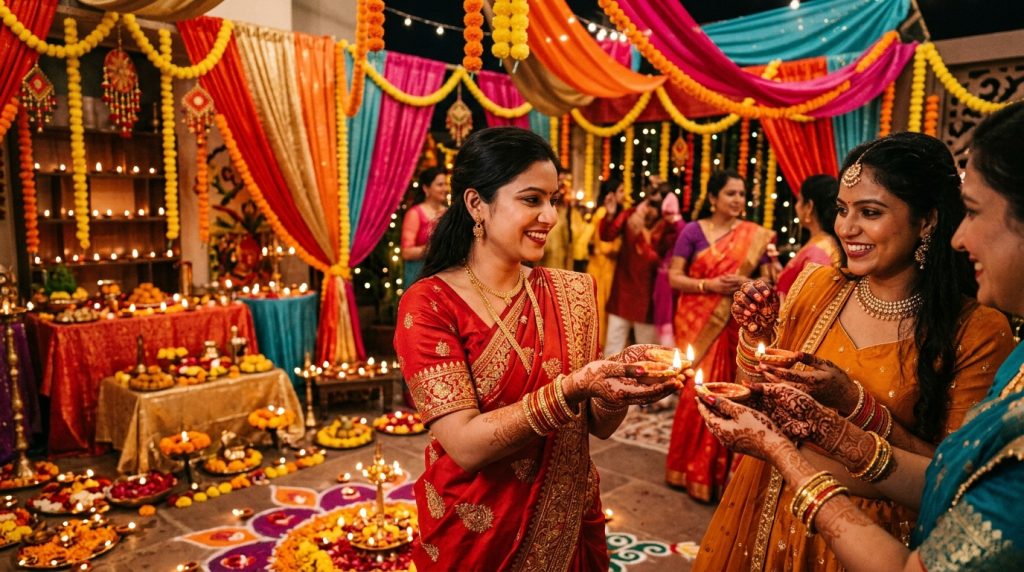
Few cultures celebrate quite like Desi communities do. Diwali’s rows of oil lamps, Eid’s post-Ramadan feasts, Holi’s explosion of color, Baisakhi’s harvest celebrations, and countless regional festivals fill the calendar with color, food, and community gathering.
What makes these festivals special isn’t just the rituals — it’s how they pull entire neighborhoods and extended families together, often for days at a time, blending religious observance with genuine community bonding.
Weddings: Days, Not Hours
A Desi wedding is rarely a single event. It’s often a multi-day affair — mehndi ceremonies, sangeet nights filled with music and dance, the main wedding ceremony itself, and a reception afterward. Each event carries its own rituals, outfits, and symbolism, built up over centuries and adapted differently by region and religion.
Food: A Language of Its Own
Desi food culture is inseparable from Desi identity. Biryani, dal, samosas, kebabs, chai — these aren’t just dishes, they’re symbols of hospitality, celebration, and comfort. Food in Desi households is rarely just fuel; it’s how care is expressed, how guests are welcomed, and how festivals are marked.
Clothing and Traditional Wear
From the elegance of a saree to the comfort of a shalwar kameez, the vibrancy of a lehenga to the sharp lines of a sherwani, Desi clothing carries centuries of craftsmanship, regional identity, and occasion-specific meaning. Even in Western countries, many Desi families continue to wear traditional outfits for weddings, festivals, and religious events.
Hospitality: Guests as Family
There’s a well-known idea in South Asian culture — “Atithi Devo Bhava” — meaning “the guest is equivalent to God.” Whether or not a household follows this phrase literally, the sentiment shows up everywhere: guests are fed generously, made comfortable, and rarely allowed to leave without eating something.
Chai Culture
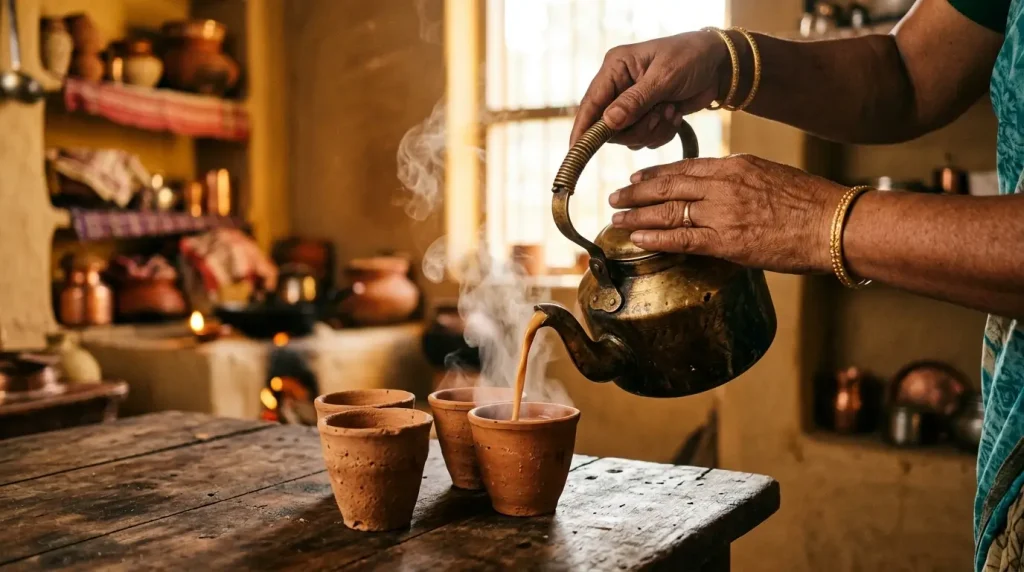
Chai isn’t just a drink — it’s a ritual. It’s what’s offered the moment someone walks through the door, what accompanies long conversations, and what marks a pause in an otherwise busy day. Across Desi households, chai is less about caffeine and more about connection.
Language and Heritage
South Asia is home to hundreds of languages and dialects — Hindi, Urdu, Punjabi, Bengali, Tamil, Sindhi, and many more. Language carries not just communication but poetry, humor, proverbs, and identity, often becoming one of the strongest ties Desi diaspora families try to preserve across generations.
Why Desi Culture Continues to Thrive
Despite migration, modernization, and generational change, Desi culture remains remarkably resilient. Much of that comes down to how deeply it’s woven into daily life rather than confined to special occasions — the food eaten at home, the language spoken with grandparents, the values quietly passed down without ever being formally “taught.”
Explore More
This guide is just the starting point. Dive deeper into specific traditions through our related articles:
- Desi Family Traditions That Define South Asian Homes
- Desi Wedding Traditions: Rituals, Meaning & Step-by-Step Guide
- Desi Food Culture: History, Flavors, and Traditions
- Desi Festivals: A Guide to South Asian Celebrations
- Desi Clothing and Traditional Wear: History & Cultural Importance
Frequently Asked Questions
What does “Desi” mean? Desi refers to people, culture, and products originating from South Asia — primarily India, Pakistan, Bangladesh, Nepal, and Sri Lanka — and their diaspora communities worldwide.
Is Desi culture the same across all South Asian countries? No. While there are shared threads like hospitality, family values, and food traditions, customs vary significantly by country, region, religion, and even individual families.
Why is family so central to Desi culture? Family structures in South Asia have traditionally been collective rather than individualistic, with multiple generations often living together and making decisions as a unit — a value system that continues even among diaspora communities abroad.
Contact us, if still have any question.