Desi Wedding Traditions Explained Step by Step
A Desi wedding is never just one event — it’s an experience. What starts as a single celebration in Western weddings often unfolds across three, five, sometimes seven days in Desi culture, with each day carrying its own rituals, outfits, music, and meaning. If you’ve ever wondered why your Desi friend’s wedding invitation had four different event names on it, this Desi Wedding Traditions guide is for you.
Here’s a step-by-step walk through the major ceremonies that make up a typical Desi wedding, and the cultural significance behind each one.
Desi Wedding Traditions Explained Step by Step
1. The Engagement (Mangni / Sagai)
Before the wedding festivities even begin, most Desi families hold a formal engagement ceremony. Rings are exchanged, families formally agree to the union, and sweets are distributed among relatives and neighbors as a way of sharing the happy news. In many communities, this is also when wedding dates and event details are finalized.
2. Mehndi Ceremony
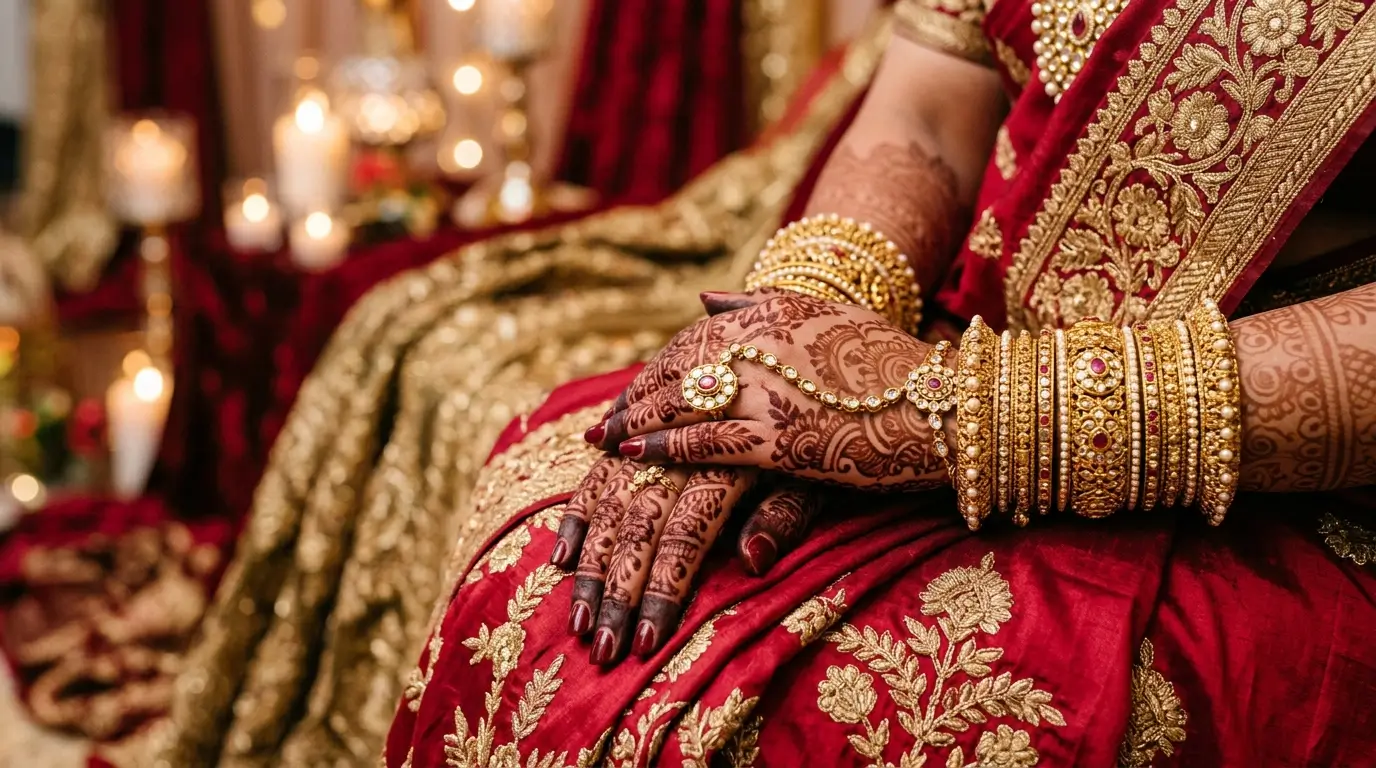
The mehndi (henna) ceremony is one of the most colorful and joyful pre-wedding events. Intricate henna designs are applied to the bride’s hands and feet — often extending up her arms — while family and friends gather for music, dancing, and traditional songs. In many cultures, the groom’s initials or name are hidden somewhere in the bride’s henna design as a playful tradition.
Mehndi isn’t purely decorative — henna has traditionally been associated with good luck, fertility, and protection, making this ceremony as symbolic as it is festive.
3. Sangeet / Music Night
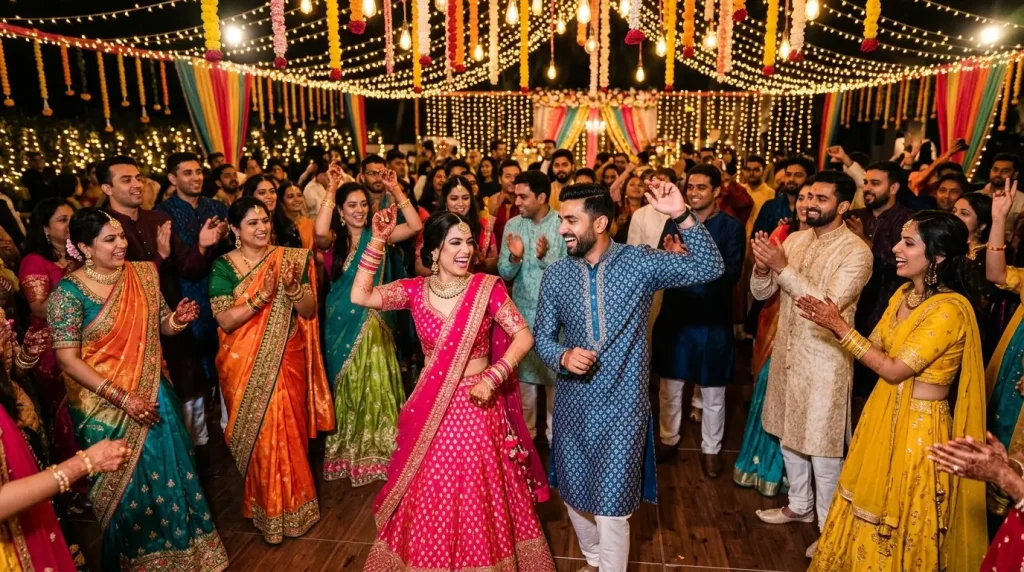
The sangeet is essentially a wedding-themed concert and dance party thrown by the families before the main ceremony. Choreographed dance performances, live singing, and good-natured family competition (whose side dances better) are the highlights. This event has become one of the most anticipated parts of modern Desi weddings, often rivaling the wedding ceremony itself in scale.
4. Haldi Ceremony
In many South Asian traditions, a haldi (turmeric) ceremony takes place shortly before the wedding. A turmeric paste is applied to the bride and groom’s skin by close family members, believed to bless the couple, ward off evil, and give the skin a natural glow before the big day. It’s a lighthearted, intimate event usually reserved for close family and friends.
5. The Main Wedding Ceremony
This is the heart of the celebration, and its format varies significantly by religion:
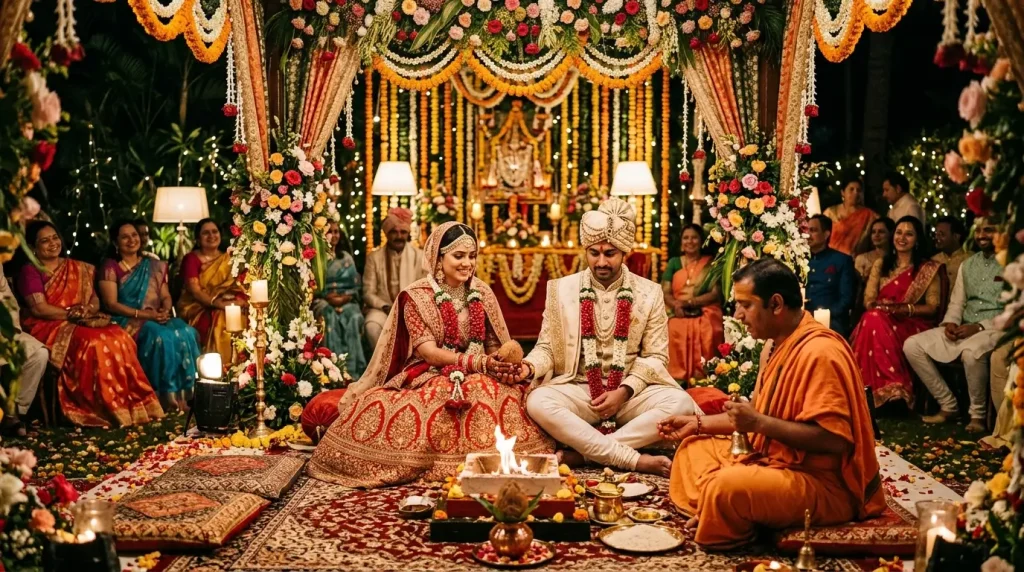
- Hindu weddings typically center around sacred fire rituals (havan), with the couple taking seven vows (saptapadi) while circling the fire.
- Muslim weddings (Nikah) involve a formal marriage contract, the exchange of consent (Qubul Hai), and a Mehr (a mandatory gift from groom to bride) as part of the Islamic marriage agreement.
- Sikh weddings (Anand Karaj) take place in a Gurdwara, where the couple circles the Guru Granth Sahib four times while hymns are sung.
Despite religious differences, common threads run through most ceremonies: vows or contracts symbolizing lifelong commitment, family blessings, and rituals meant to invoke prosperity and happiness for the couple.
6. Rukhsati / Vidaai (The Bride’s Farewell)
One of the most emotional moments of a Desi wedding is the bride’s farewell from her family home. Tears are common and expected — this moment marks the bride formally leaving her parents’ household to begin her new life. Rice is often tossed over the bride’s shoulder as she leaves, symbolizing prosperity for the family she’s leaving behind.
7. Reception (Walima / Reception)
The reception is typically hosted by the groom’s family and serves as a more formal introduction of the newly married couple to extended family, friends, and community members who may not have attended the earlier events. In Muslim traditions, this is called the Walima and holds specific religious significance as a public announcement of the marriage.
Why These Traditions Still Matter
Even as Desi weddings modernize — incorporating Western elements like destination venues, professional choreography, and fusion outfits — the core rituals have remained remarkably intact. That’s because these ceremonies aren’t just tradition for tradition’s sake; they represent family bonds, religious values, and community celebration all woven into a single, unforgettable event.
Explore More
- Desi Mehndi Traditions: Art, Symbolism, and Occasions
- Desi Family Traditions That Define South Asian Homes
- Desi Clothing and Traditional Wear: History & Cultural Importance
Frequently Asked Questions about Desi Wedding Traditions
How many days does a typical Desi wedding last? Most Desi weddings span 3 to 5 days, including the mehndi, sangeet, main ceremony, and reception, though this varies by family, region, and budget.
What is the difference between a Nikah and a Walima? The Nikah is the actual Islamic marriage contract ceremony, while the Walima is the reception held afterward by the groom’s family to publicly celebrate the marriage.
Why is henna applied before weddings? Henna is traditionally believed to bring good luck, protection, and fertility to the bride, in addition to being a beautiful pre-wedding beauty ritual.
Visit Desi Hut for more topics.