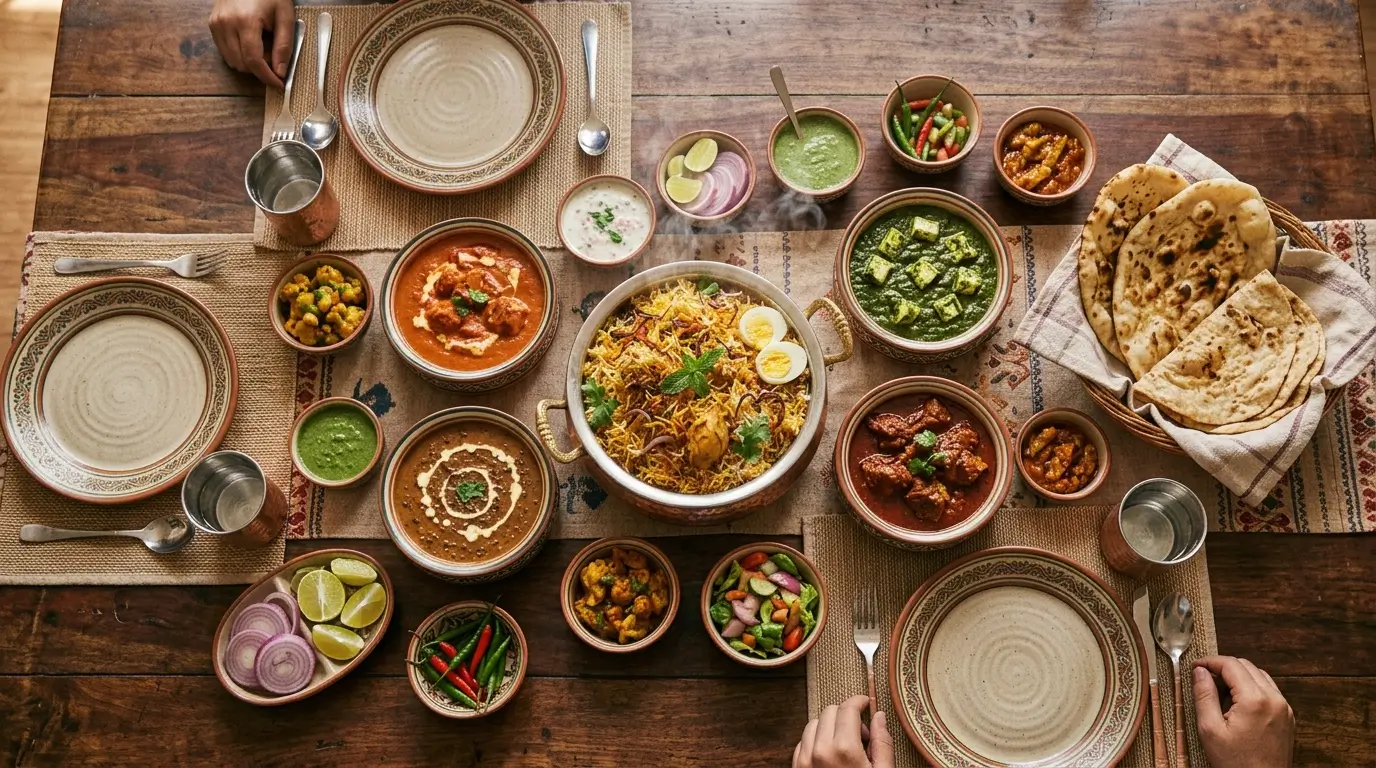
Desi Food Culture: History, Flavors, and Traditions
Ask anyone who grew up in a Desi household what they miss most when they’re away from home, and food is almost always near the top of the list. Not just the taste — the entire experience. The smell of spices being tempered in hot oil. The sound of a pressure cooker whistling in the kitchen. The insistence that no guest ever leaves without eating “just a little something.”
Desi food culture isn’t simply about recipes passed down through generations — it’s a language of love, identity, and belonging that shapes daily life across South Asia and its diaspora communities worldwide.
A History Shaped by Trade, Empires, and Geography
South Asian cuisine has been shaped over centuries by an extraordinary mix of influences — Mughal royal kitchens, Persian and Central Asian trade routes, Portuguese and British colonial exchanges, and the sheer geographic diversity of the region itself, from Himalayan foothills to coastal plains.
The Mughal era in particular left a lasting legacy, introducing rich, slow-cooked dishes like biryani and korma, along with the use of dried fruits, nuts, and fragrant spices like saffron and cardamom in everyday cooking. Meanwhile, coastal regions developed their own distinct seafood-forward cuisines, while northern regions leaned into wheat-based staples like roti and paratha, and southern regions built their meals around rice, lentils, and coconut.
The Role of Spices
If there’s one thing that defines Desi cooking globally, it’s spice — not just heat, but complexity. Turmeric, cumin, coriander, garam masala, and countless regional spice blends form the backbone of most dishes, each combination telling you something about the region or family it comes from.
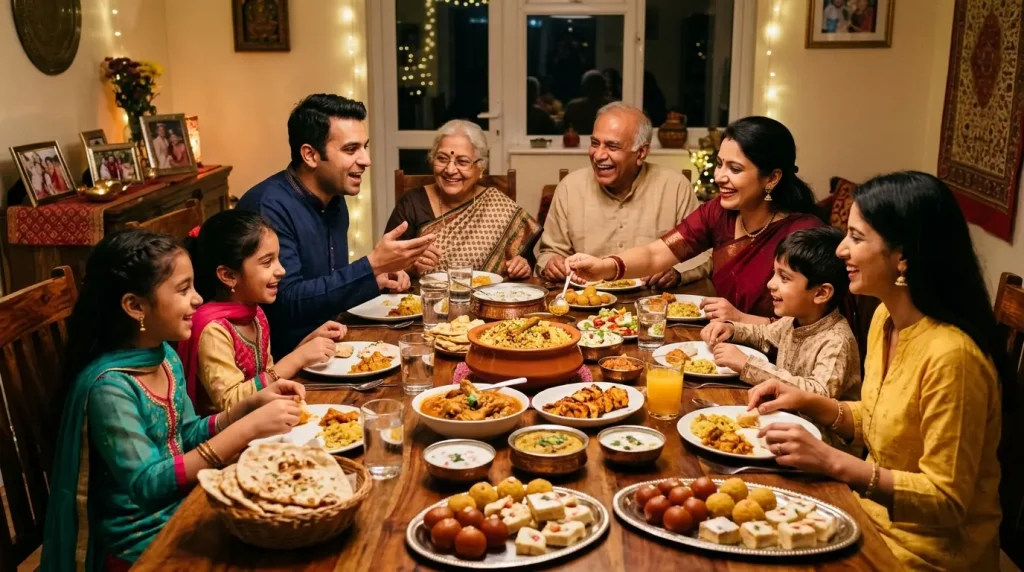
Spices in Desi households aren’t just about flavor, either. Turmeric has long been valued for its warming, antiseptic properties. Ginger and garlic are staples believed to aid digestion. Many spice combinations passed down through generations carry both culinary and traditional wellness significance.
Iconic Dishes and What They Represent
- Biryani — Perhaps the most celebrated Desi dish, biryani varies dramatically by region (Hyderabadi, Sindhi, Lucknowi, and more), but universally represents celebration, hospitality, and effort — this isn’t a weekday dish, it’s a “we have guests” or “we’re celebrating something” dish.
- Dal — A humble lentil dish found in nearly every Desi household, dal represents comfort food at its core — simple, nourishing, and often the first dish children learn to cook.
- Samosas — A beloved snack found at nearly every gathering, celebration, or rainy afternoon tea session.
- Kebabs — Grilled or fried meat preparations that vary by region, often associated with festive occasions and family gatherings.
- Chai — Not a dish, but arguably the most consistent thread across all Desi households (so central to the culture, it deserves — and gets — its own dedicated article on this site).
Food as Hospitality
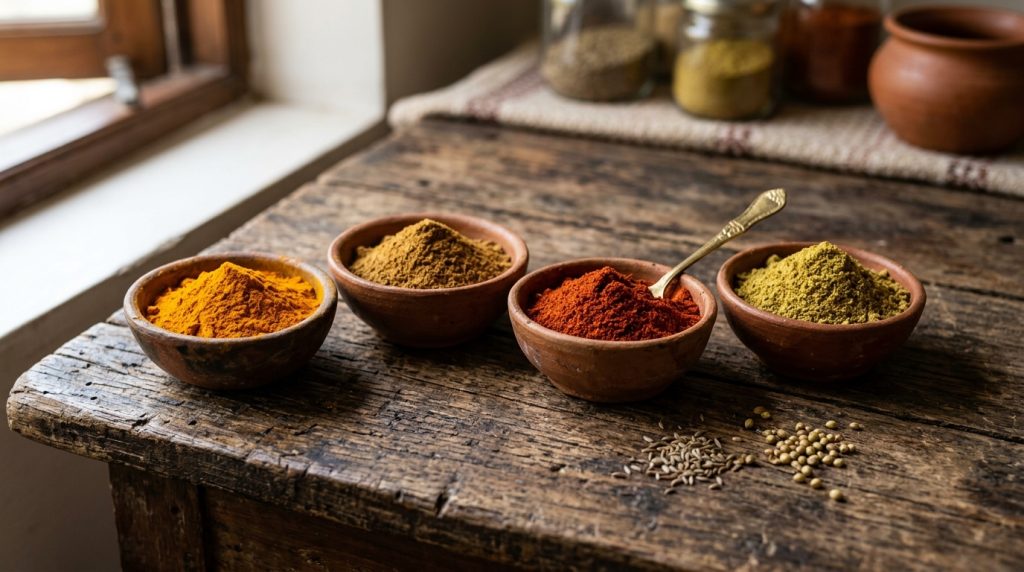
In Desi culture, feeding a guest isn’t just polite — it’s practically a duty. The idea that “the guest is equivalent to God” (Atithi Devo Bhava) shows up constantly around the dinner table. Turning down food, even after saying you’re full, is often met with more food being offered anyway. This isn’t overbearing hospitality — it’s a deeply held cultural value where feeding someone is one of the most sincere ways to express care.
Food and Celebration
Nearly every Desi festival, wedding, or milestone is marked by specific foods. Sweets are distributed to celebrate engagements, births, and festivals. Biryani or elaborate multi-course meals mark weddings. Specific dishes are prepared for religious occasions — from festive Eid dishes to Diwali sweets to regional harvest festival specialties.
Food isn’t a side element of these celebrations — it’s often central to how the celebration is remembered.
Food in the Diaspora
For Desi families living abroad, food often becomes one of the strongest threads connecting them to their heritage. Recreating a grandmother’s recipe in a kitchen thousands of miles from where it originated, seeking out specific spices at ethnic grocery stores, or introducing traditional dishes to friends from other cultures — these are small but meaningful ways diaspora communities keep their culinary heritage alive.
Why Desi Food Culture Endures
Despite globalization and changing lifestyles, Desi food culture remains remarkably resilient because it’s rarely just about the food itself. It’s tied to memory, family, celebration, and identity in ways that make it far more than a cuisine — it’s a living tradition passed from one generation’s kitchen to the next.
Explore More
- Desi Sweets and Their Role in Celebrations
- Desi Tea Culture: Why Chai Brings People Together
- Desi Hospitality: Why Guests Are Treated Like Family
Frequently Asked Questions
What makes Desi food different from other cuisines? Desi food is defined by its complex use of spices, regional diversity across South Asia, and its deep cultural association with hospitality, celebration, and family tradition rather than being purely about taste.
Why is biryani considered special in Desi culture? Biryani is typically reserved for celebrations and guests rather than everyday meals, making it a symbol of hospitality and festivity across many South Asian communities.
How has Desi food culture influenced global cuisine? Dishes like curry, biryani, and various spice blends have become globally popular, with Desi restaurants and home cooks introducing South Asian flavors to international audiences over the past several decades.
You can read more various articles on Desi Hut.